Showing posts with label post. Show all posts

Tuesday, 10 December 2013

1150-1157 - a miscellany


1150 – A sculpture from the Great Tower at Gangaikonda Cholapuram from Amit in India.


Gangaikonda Cholapuram was erected as the capital of the Cholas by Rajendra Chola I, the son and successor of Rajaraja Chola, the great Chola who conquered a large area in South India, Sri Lanka, Bangladesh, Sumatra, Kadaram (Kedah in Malaysia) at the beginning of the 11th century A.D. It occupies an important place in the history of India. As the capital of the Cholas from about 1025 A.D. for about 250 years, the city controlled the affairs of the entire south of India, from Tungabhadra in the north to Ceylon in the south, and other south east Asian countries. 

The great temple of Siva at this place is next only to the Brihadisvara temple at Thanjavur in its monumental nature and surpasses it in sculptural quality.  It is one of the three Great Living Chola Temples which make up an Indian UNESCO WHS.

1151 – A delightfully cute Christmas card from my friend Susanne in Germany. 


Another good stamp


And a sticker.


1152 – Historic post uniforms from around 1850 on this maxi-card from Lars in Germany (DE-270646)


1153 – Miriam sent this typical Dutch card (NL-220140).    It’s just SO Dutch…


1154 – Ute in Germany sent this card (DE-2702719) – a reminder of Ivy!


1155 – Rita, such a kind friend in Denmark, sent me this picture of a Danish postman.


And on the back was one of the Europa postal vehicle stamps.


1156 – From Monica in Sweden, a rabbit.  You can almost see its nose twitch.


1157 – Also from Monica, another Lennart Helje card.


Lennart Helje, born in 1940 in Lima , is a Swedish artist , best known for his Christmas cards with little gnomes or brownies on them. 


Quite often Helje’s brownie is accompanied by animals such as a fox or a moose.  As Monica wrote, the fact that there is no actual Christmas greeting on the cards means she can send more than one.  Both of the ones she has sent this month will be displayed with our Christmas cards which straddle the living room.

1140 - 1149 (Early December 2013)


1140 – Anastasia sent me this new map for my collection. In case you are wondering what the symbol for Minsk is (in the centre) it is the new National Library Building.


And beautiful stamps


And a patriotic sticker…
 
1141 – Tina, a Canadian Postcrosser (CA-393330), sent me this card.


The royal family stamps are just perfect.


1142 – Amit in India not only sent me smiles but also another UNESCO WHS card. 


Hampi is a village in northern Karnataka state, India. It is located within the ruins of Vijayanagara, the former capital of the Vijayanagara Empire. Predating the city of Vijayanagara, it continues to be an important religious centre, housing the Virupaksha Temple, as well as several other monuments belonging to the old city. The ruins are a UNESCO World Heritage Site, listed as the Group of Monuments at Hampi.

The “Stone Chariot”, as it is often referred to, is the flagship tourist attraction of Hampi. This is not a chariot ,as the name suggests, rather a shrine built like a chariot. This is located inside the Vittala Temple campus.  The chariot is built on a rectangular platform of a feet or so high. All around this base platform is carved with mythical battle scenes. Though the chariot is not resting on it, the four giant wheels attached mimic the real life ones complete with the axis shafts and even the brakes. A series of concentric floral motifs decorate the wheels. It appears from the marks on the platform, where the wheels rest, the wheels were free to move around the axis.

1143 – Danielle and I both like cats but there are limits!  This photo of ‘The Katzes (with Moe at centre) 1981’ is great but I’d not like to have to live with all those. 

Aren’t the tiered baskets great?


And even the pictures on the walls are of cats.

A Christmas stamp.
 
1144 – A Christmas card from Damien in France.


With one of the Véhicules postaux EUROPA stamps on it.


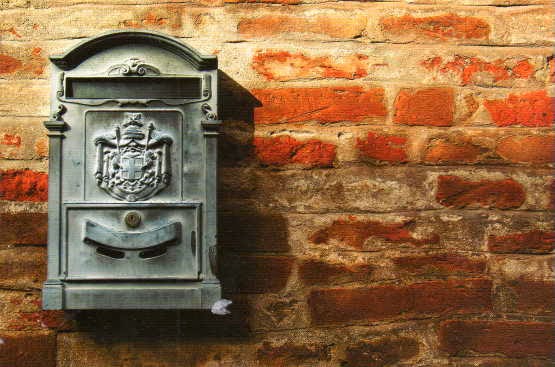
1145 – Another beautiful post-box maxi-card from Sini in Finland.


 1148 - And another post-box from Siggi in Germany -


1146 – From Susanne in Germany comes this beautiful old-fashioned Christmas card.


I love the stickers Susanne uses…


1147 – The background to this great map card from Rita in Denmark is the Danish flag.


The Flag of Denmark (Danish: Dannebrog) is red with a white Scandinavian cross that extends to the edges of the flag; the vertical part of the cross is shifted to the hoist side. The cross design, which represents Christianity, was subsequently adopted by the other Nordic countries; Sweden, Norway, Finland, Iceland, Åland Islands and the Faroe Islands, as well as the Scottish archipelagos of Shetland and Orkney. During the Danish-Norwegian personal union, Dannebrog ("Danish cloth") was also the flag of Norway and continued to be, with slight modifications, until Norway adopted its current flag in 1821.
According to legend, the flag came into Danish possession during the Battle of Lyndanisse in 1219. The Danes were on a failing crusade in Estonia, but after praying to God a flag fell from the sky. After this event, Danish King Valdemar II went on to defeat the Estonians. The first recorded uses of the flag appear some one hundred years later.

1149 – Another card from Rita – this time a Christmas card.  God Jul is, of course, Merry Christmas.


Tuesday, 3 December 2013

To the end of November


1120 – From Damien in France.   Sébastien Le Prestre de Vauban (1633-1707), is considered one of the greatest military engineers of all time. In his life he was responsible for the fortification of over 160 places in France.  Mostly during the reign of Louis XIV, Vauban built fortresses around the borders of France to protect her from invasion (mostly by the British and the Spanish).   

  
1121 – La Boule de Fort, from Damien, shows a game that is part of the Angevin heritage. Some trace its origin to the Loire boatmen who played in the holds of their curved barges. Others say that it was born using former ball bearings from windmills.

  
1122 – also from Damien. 


1123 – the French porcelain industry began in Limoges at the end of the 18th century.  Sadly the demand for porcelain is declining and the industry is in recession.


1124 – From Damien, this chateau saw the death of Richard the Lionheart in 1199, an event which is thought to have changed the course of European history.


1125 – Susanne, my friend in Germany, has known about my desire to have a Rosina Wachtmeister card and has been kind enough to search one out for me.  Not an easy task since they are out of print. 


When it landed on the mat I was so delighted.  Thank you ever so much, Susanne.  If you want to know more about Rosina Wachtmeister she has appeared on my Rambles blog a couple of times.

Susanne is having trouble commenting on this blog. I'm not sure why but if anyone else is having trouble they can e-mail me at scriptorsenex at gmail dot com and I'll post the comment for them. 

1126 – From Irène in France, a postcrossing card (FR-333859).


Le Lavandou is a commune in the Var department in the Provence-Alpes-Côte d'Azur region in southeastern France.  It derives its name either from the flower lavender (lavanda in Provençal) that is prevalent in the area, or more prosaicly from the local form of the Occitan name for lavoir, lavandor (for lavador, a public place for washing clothes).

The (then) village is where the famous popular song A Nightingale Sang in Berkeley Square was written in the summer of 1939. The words were by Eric Maschwitz and the music by Manning Sherwin, with its title ‘stolen’ from a story by Michael Arlen. The song had its first performance in a local bar, where the melody was played on piano by Manning Sherwin with the help of the resident saxophonist. Maschwitz sang the words while holding a glass of wine, but nobody seemed impressed.

In September 2000, the mayor passed an unusual bye-law making it illegal to die in the town. The mayor described his own bye-law as "absurd ... to counter an absurd situation"; the "absurd situation" was that with the town's cemetery already full, a court in Nice had denied permission for a new cemetery because it would mar the beauty of the selected site.

1127 – From EJ in the Netherlands. 


As always EJ’s card included some interesting stamps 


I recall the stamp on the left from my stamp collecting days as it was one of the first I saw that was not rectangular.

1128 – This delightful card from Renate in Austria only took two days to get to me.  That’s quicker than second class internal mail.  It is by English-born Canadian Impressionist Laura Muntz Lyall (1860-1930) and entitled ‘An interesting story’. 


1129 – A card from Danielle from Nebraska.  It was Danielle who introduced me to postcrossing.  Norman Rockwell’s ‘A Time for Greatness’ appeared in the July 14th 1964 issue of ‘Look’.  There is no one of my generation who does not recall where they were when the news of Kennedy’s assassination hit them in November of that year.   


My first 2013 Christmas stamp!

1130 - Heidi from Norway sent me this postcrossing card (NO-84815) from my 'Favourites' wall'.

I love maps like this that show for what the various parts of an area are noted.


1131 – Susanne from Germany sent this ‘Good Morning Mr Postman’ picture from around 1900.


Not only did it arrive in this lovely envelope but inside were four post-box stamps.


1132 – A postcrossing card from Mojca from Slovenia (SI-87348).  It shows an old map of Slovenia’s third biggest city, Celja.


A lovely Slovenian stamp.


1133 – The family’s first Christmas card – from Sini in Finland. 
   

The picture is by Mauri Tapio Kunnas (born February 11, 1950), a Finnish cartoonist and children's author.  Kunnas matriculated in 1969 and graduated from the University of Art and Design in Helsinkii as a graphic designer in 1975. He has worked as a political cartoonist in many Finnish newspapers. He is currently living in Espoo with his wife Tarja, children Jenna (1983) and Noora (1987) and their cat.  Kunnas is most famous for his numerous children's books, featuring anthropomorphic animals. His most famous children's book series is called Koiramäki (Dog Hill), set in historical Finland, featuring anthropomorphic dogs.

The church on the hill in this picture is St. Olaf's Church, a late medieval fieldstone church in Tyrvää, Sastamala, Finland.  It was built around 1510–1516 and burned down by a pyromaniac in 1997.  The church was rebuilt by local people and the interior paintings were created by painters Kuutti Lavonen and Osmo Rauhala.


Merry Christmas and a Happy New Year  (or ‘Merry Christmas and a Happy New for Nothing’ as my first attempt at translation came up with!)