
October is
only 2 days old and already it has brought me nine cards. How wonderful is that?

945 – Eva in
Morocco - La Llotja de la Seda, Valencia, Spain – a UNESCO World
Heritage Site
Built
between 1482 and 1533, this group of buildings was originally used for trading
in silk (hence its name, the Silk Exchange) and it has always been a centre for
commerce. It is a masterpiece of late Gothic architecture. The grandiose Sala
de Contratación (Contract or Trading Hall), in particular, illustrates the
power and wealth of a major Mediterranean mercantile city in the 15th and 16th
centuries.

946 – Eva in
Morocco – The Alhambra Palace and Fortress, Granada, Spain – a UNESCO World
Heritage Site
Rising above
the modern lower town, the Alhambra and the Albaycín, situated on two adjacent
hills, form the medieval part of Granada. To the east of the Alhambra fortress
and residence are the magnificent gardens of the Generalife, the former rural
residence of the emirs who ruled this part of Spain in the 13th and 14th
centuries. The residential district of the Albaycín is a rich repository of
Moorish vernacular architecture, into which the traditional Andalusian
architecture blends harmoniously.

947 – Eva in
Morocco – The Medina of Tétouan, Morocco – a UNESCO World Heritage Site
Tétouan was
of particular importance in the Islamic period, from the 8th century onwards,
since it served as the main point of contact between Morocco and Andalusia.
After the Reconquest, the town was rebuilt by Andalusian refugees who had been
expelled by the Spanish. This is well illustrated by its art and architecture,
which reveal clear Andalusian influence. Although one of the smallest of the
Moroccan medinas, Tétouan is unquestionably the most complete and it has been
largely untouched by subsequent outside influences.

948 – Eva in
Morocco – The Tower of Babel by Otto Munch in Zurich Cathedral’s door.
The back of
these four cards from Eva in Morocco formed a letter. One of the nicest I have had in a long time!

949 – Carol from
Washington but in England – St. Albans, England.
A pictorial
plan of the medieval monastery. Carol (from
Washington) sent this while she and her husband Rob toured England. Rob is English and visiting St Albans allowed
him to explore some of his old haunts.

I
don't often get the chance to show a British stamp. This one is part of a series of six Merchant
Navy stamps recently issued by the Royal Mail.


950 – Susanne
in Germany – Detail from Fray Jeronimo Perez by Francisco Zurbaran (1598-1664). As you will know by now I love pictures of
writing implements and hands writing. This
is one of the best I have received.

The back of
this postcard had four stamps on it of historic postal uniforms from 1850 from different
parts of Germany. Aren’t they grand!! I shall have to put a colour photocopy of
these into my postal scrapbook.
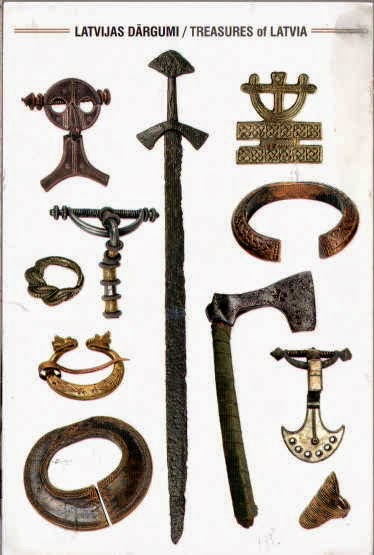
951 – Santa in
Latvia (LV-119434) – Treasures of Latvia
Men’s
jewellery and weapons from the 5th to the 14th centuries.

952 – Amit in
India – Mahabalipuram - a UNESCO World Heritage Site
This group
of sanctuaries, founded by the Pallava kings, was carved out of rock along the
Coromandel coast in the 7th and 8th centuries. It is known especially for its
rathas (temples in the form of chariots), mandapas (cave sanctuaries), giant
open-air reliefs such as the famous 'Descent of the Ganges', and the temple of
Rivage, with thousands of sculptures to the glory of Shiva.

Amit and I
are swapping directly and this is my first postcard from India.

I love these stamps.

953 – Riitta
in Finland (FI-1879091) – Another super Inge Löök painting.


